What is language immersion and why does it work for teenagers?
Language immersion is a learning approach in which a student is surrounded by the target language in a real-life context, not just during lesson time. For teenagers aged 10 to 17, immersion is the most effective method for developing communicative fluency, because it draws on the natural brain plasticity of this age group and the social motivation that drives adolescents.
Unlike traditional classroom lessons, where English is a subject to be studied, in immersion English becomes a tool for communicating, socialising and living experiences. The teenage brain doesn't 'study' the language — it acquires it through real, constant use.
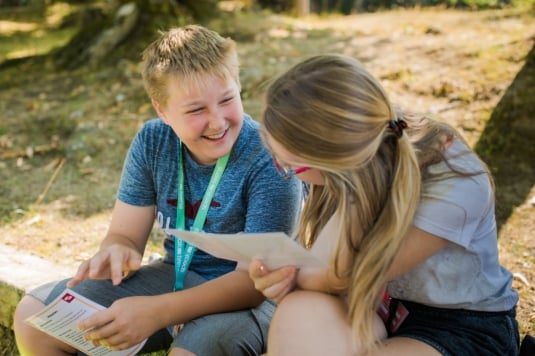
The difference between immersion and traditional lessons
In a traditional language school, a student is exposed to English for 3–4 hours a day, in a formal setting, surrounded by classmates who all share the same mother tongue. The rest of the day they return to Italian. Real exposure to the language is limited.
In a well-designed immersion programme, English is the language of communication for the entire day — at breakfast, during sports, in free time, at the table, in the evening. Exposure isn't 3–4 hours: it's 14–16 hours a day. The brain is constantly stimulated to understand, process and respond in English.
For teenagers, one further element makes immersion particularly effective: social motivation. A teenager who wants to communicate with a peer they like, with whom they share a sporting passion or an adventure, is far more motivated than a student completing a grammar exercise.

Student-to-native speaker ratio
The most decisive factor. A 1:1 ratio ensures English is the language of every moment of the day.
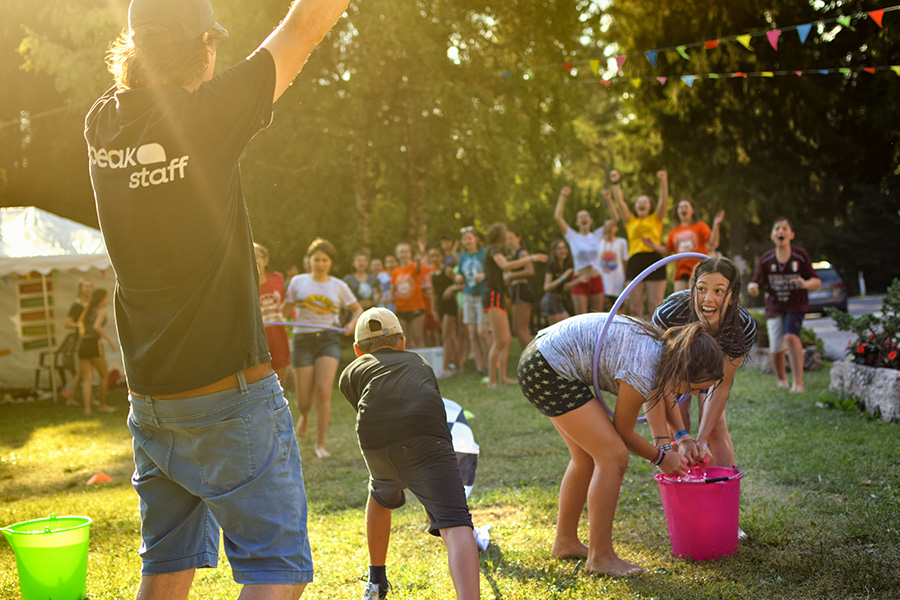
Age of native speakers
For teenagers, talking to peers is far more effective than talking only to adult teachers. Spontaneous conversation between equals builds natural fluency and confidence.
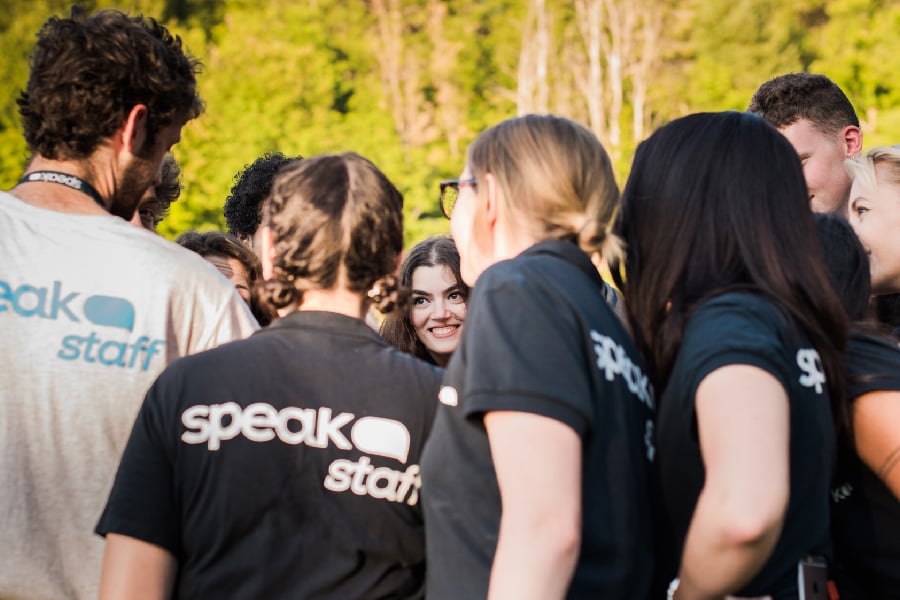
Daily structure
A serious programme doesn't separate 'lesson time' from 'free time'. Meals, sports, excursions, evenings: every moment is a learning opportunity.
Immersion in Italy: the Speak Teens approach
Speak Teens is a language immersion summer camp at Valbonella, in the Casentino Forests National Park in Emilia-Romagna. The defining feature is the 1:1 ratio between Italian students and native English-speaking peers — the Teen Anglos — from the UK, Ireland, the US, Canada and Australia.
In 8 days, participants live a fully English experience: One-to-One sessions with the Teen Anglos, interactive outdoor lessons with qualified TEFL teachers, sports, trekking, a full-day forest adventure park excursion, themed evenings and the option to sit the Cambridge English Skills Test.
Speak Teens: 80+ hours of real English in 8 days, 1:1 with a native-speaking peer
Camp 1: 3–10 Jul · Camp 2: 10–17 Jul 2027. Ages 10–17.

How to evaluate an immersion programme: 5 key criteria
Not every programme that calls itself immersive offers the same depth of immersion. The 5 criteria that matter most: (1) student-to-native speaker ratio, (2) age of native speakers, (3) daily structure, (4) certification and progress measurement, (5) safety and welfare. For a full guide to choosing: how to choose an English summer camp for your teenager.
I strongly recommend this experience. The linguistic results she achieved are ones I still find hard to believe. Among her peers she's now known as 'the one who speaks English'.
Mena Vicaretti
Parent