What makes a good English summer camp — and how to tell them apart
Every camp promises “full immersion”, “qualified staff” and “fun activities”. But when you dig into the details, the differences are significant — and they determine whether your child comes home more confident in English or just better at table tennis.
This guide walks you through the five criteria that actually matter, with the questions to ask and the numbers to verify before you book.
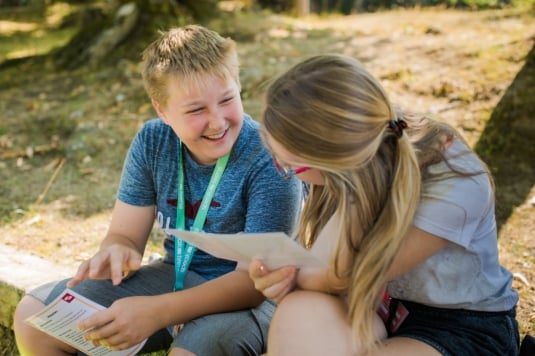
1. The student-to-native-speaker ratio
This single number tells you more about a camp than any brochure. It determines how much real spoken English each student gets each day.
What to look for: A 1:1 ratio — one native-speaking peer for every Italian student — is the gold standard. At this ratio, English becomes the language of every conversation, every meal, every game.
What to watch out for: Many camps describe themselves as immersive but operate at ratios of 1:4, 1:6 or worse. At those levels, students naturally cluster with Italian-speaking friends and English becomes optional.
2. The age and profile of the native speakers
Adult teachers are essential for structured learning, but they cannot replicate what a teenage native speaker offers: authentic peer-to-peer conversation, current language, real topics and no sense of a lesson.
Ask: Are the native speakers students or adult staff? What countries are they from? A camp with native speakers from only one country gives students a narrower language experience.
3. How the daily programme is structured
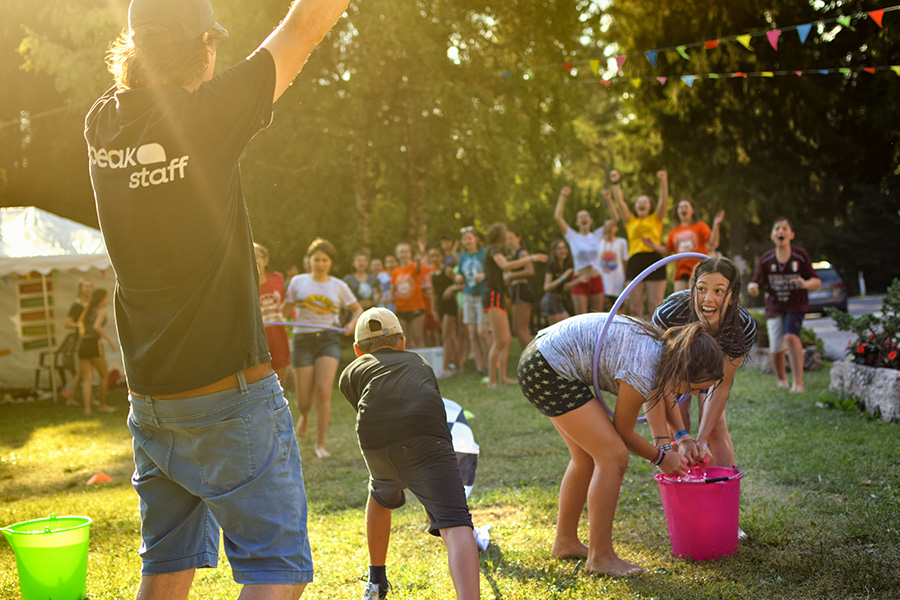
A meaningful immersion camp does not divide the day into English time and free time. Every moment — meals, sport, evening events, excursions — should happen in English, with native speakers present throughout.
- Structured one-to-one sessions between each student and a native speaker, every day
- Native speakers at all meals and activities, not just in class
- Evening events designed to generate natural conversation
- A full-day outdoor excursion with native speakers

4. Welfare and child protection
Beyond language learning, parents need to know their child is safe, supervised and supported — especially on a residential programme away from home.
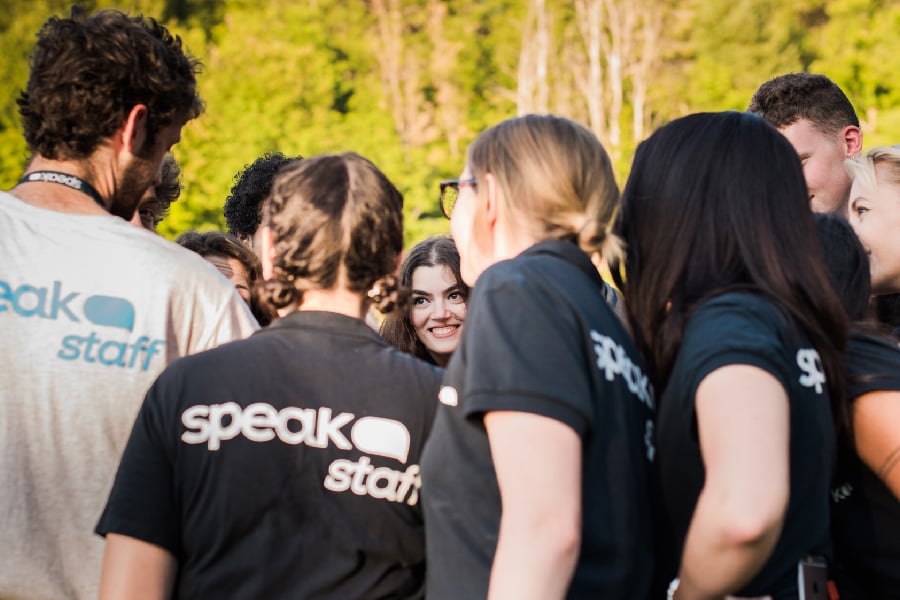
- A dedicated welfare team, separate from teaching staff
- A supervision ratio of 1:6 or better
- Staff sleeping in the same building as students
- A clear phone policy — phones managed by staff and returned at a fixed time daily
- An emergency number available 24 hours
Ask: Who is responsible for welfare, and what happens if a student is homesick or unwell at 2am?
5. Transparency about numbers and location
A reputable camp gives exact numbers, not ranges. It names the facility and you can look it up. It tells you the maximum capacity per camp and what the student-to-staff ratio actually is.
At Speak Teens: We run a maximum of 60 students per camp at Centro Turistico Valbonella, Bagno di Romagna — exclusive use for the duration. The 1:1 student-to-Teen-Anglo ratio is structural, not aspirational. Welfare staff are on-site 24 hours a day.
Five questions to ask before you book
1. What is the exact ratio of Italian students to native-speaking students?
2. Are the native speakers teenagers or adults?
3. Are native speakers present at all activities, or only during lessons?
4. Who is responsible for welfare at night, and what is the supervision ratio?
5. What is the name and address of the facility?
If a camp cannot answer all five clearly and in writing, that tells you something important.

What Speak Teens does differently
Speak Teens was built around these five criteria from the start. The 1:1 ratio between Italian students and Teen Anglos — native-speaking peers aged 13–17 from the UK, Ireland, USA, Canada and Australia — is not a marketing claim. It is a structural commitment.
TEFL-qualified teachers run small-group outdoor lessons each morning. The rest of the day — meals, sport, workshops, the full-day forest adventure park excursion, evening events — happens in English, with Teen Anglos alongside students at every moment.
A Language Assessment completed online before arrival groups students by level for lessons. The Cambridge English Skills Test is available at the end of camp. Welfare staff sleep on-site. Phones are returned between 18:45 and 19:45 each day. Two camps run in summer 2027: Camp 1 (3–10 July) and Camp 2 (10–17 July), both at Valbonella in the Emilia-Romagna Apennines.