The native-speaking teenagers at the heart of Speak Teens
The Teen Anglos are what makes Speak Teens different from every other English summer camp in Italy. They are real teenagers — native speakers of English aged 13 to 17 — who live at camp alongside Italian students for the full eight days.
This guide explains who they are, where they come from, how they are selected and trained, and why their presence at a 1:1 ratio is the structural fact that determines everything else about how the camp works.
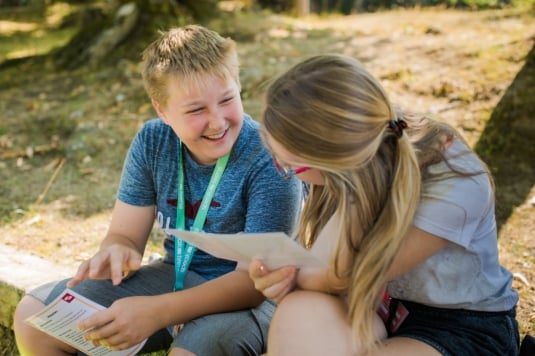
Who they are
Teen Anglos are native English speakers aged 13 to 17, recruited from the UK, Ireland, USA, Canada and Australia. They come to Valbonella to live at camp for the full week: eating meals, sharing activities, taking part in evening events and excursions alongside Italian students throughout every day.
They are not teaching assistants. They are not junior staff. They are participants in their own right — young people who have applied to be part of an immersive experience, knowing that their role is to be a genuine conversation partner, not to perform a function.
How they are selected
Teen Anglos apply to Speak Teens and are selected on the basis of their communication skills, maturity and openness to cultural exchange. The process is competitive: not every applicant is accepted.
Selected Anglos receive preparation before camp: an introduction to the immersion method, guidance on how to support Italian students without making them feel assessed, and an orientation to the camp environment and welfare expectations.
The 1:1 ratio
The student-to-Teen-Anglo ratio at Speak Teens is 1:1. For every Italian student on camp, there is one Teen Anglo. This is not a marketing ratio calculated from a combined headcount — it is the actual number of native-speaking peers available to interact with Italian students at any given moment.
At a 1:1 ratio, English is not a language you practise during scheduled sessions. It is the language you use to communicate, because there is always a native speaker nearby who does not share your first language.
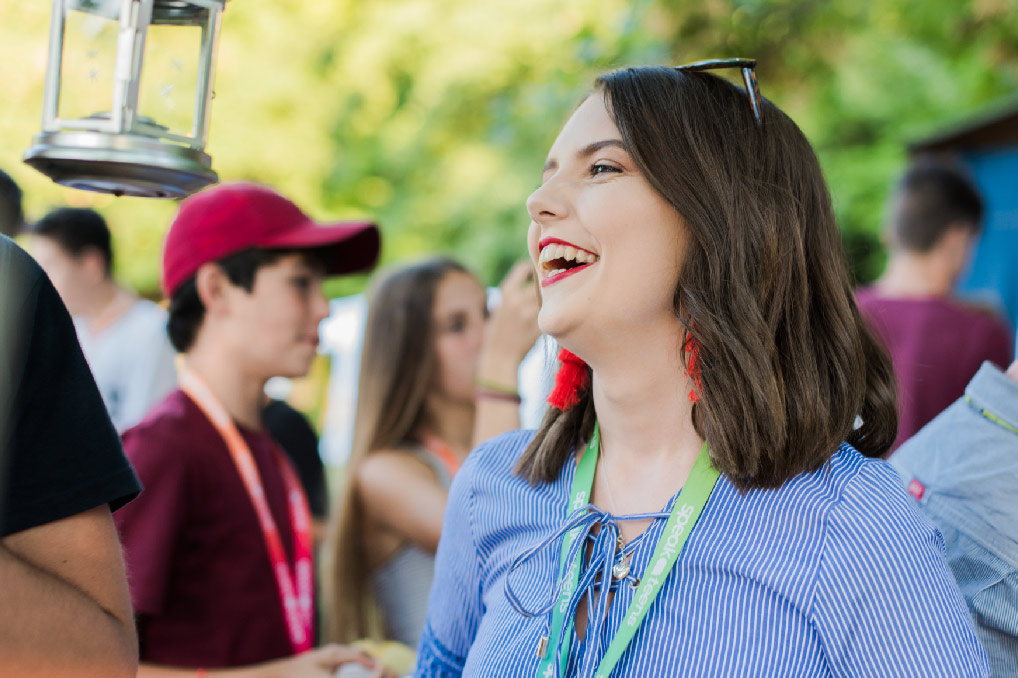
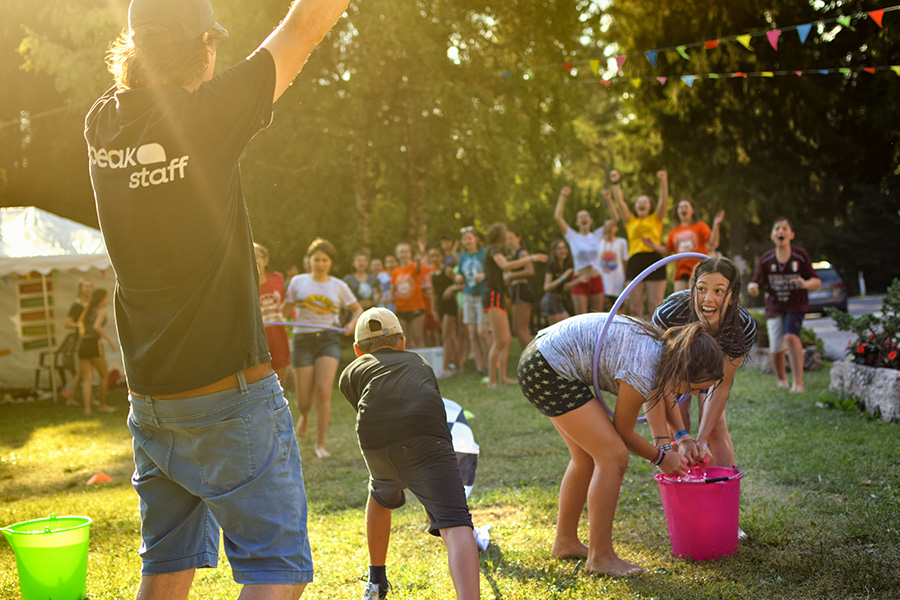
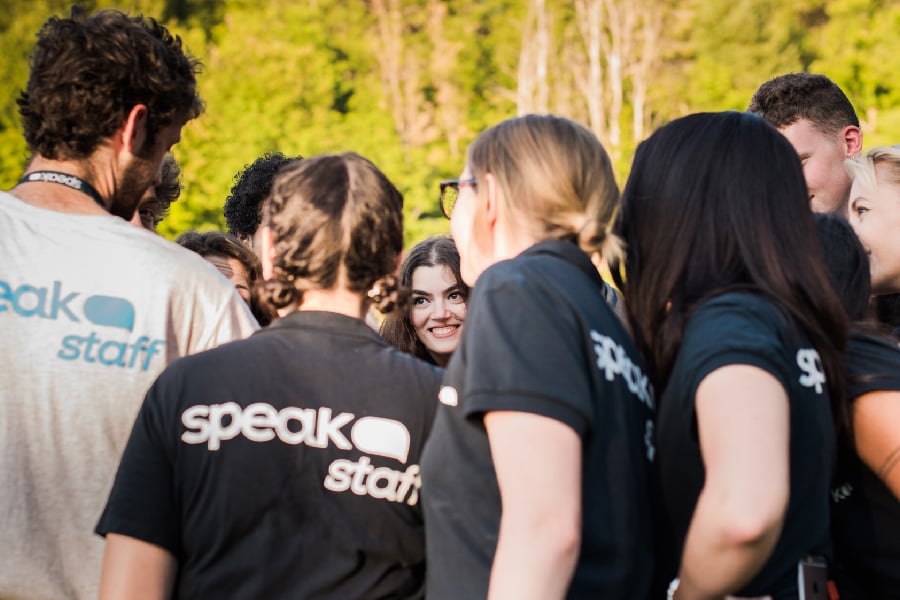
What they do at camp
Teen Anglos are present throughout every part of the camp day:
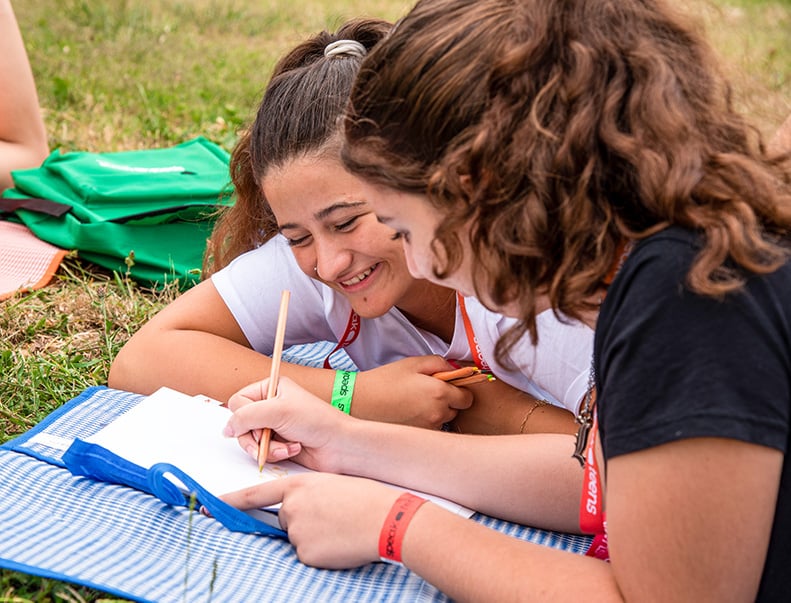
- One-to-one sessions. Each Anglo is paired with one Italian student for a dedicated daily session — just the two of them, no audience, no teacher. The Anglo rotates daily, so each student interacts with multiple native speakers over the course of the week.
- Meals. Teen Anglos eat at the same tables as Italian students. Mealtimes are among the most naturally productive conversation moments of the day.
- Activities. Sport, workshops, the Team Challenge, the full-day forest adventure park excursion, astronomy sessions — all shared with Anglos throughout.
- Evening events. Quiz nights, cultural evenings, music sessions — designed to generate natural conversation in a relaxed setting.
What makes them effective
The effectiveness of a Teen Anglo as a language partner comes from two things that cannot be replicated by an adult teacher: shared age and genuine peer status.
When a 15-year-old from Cork talks to an Italian student about music or social media, the conversation is real. The topics matter to both of them. The language is natural and unscripted. The Italian student is not being assessed — they are just talking.
That is the environment in which language acquisition happens most reliably.
Multiple accents. Multiple perspectives.
Because Teen Anglos come from the UK, Ireland, USA, Canada and Australia, Italian students at Speak Teens are exposed to a range of native-speaker accents and cultural perspectives over the course of the week.
This matters for real-world listening comprehension. The English a teenager will encounter after camp — in films, music, online, in travel — is not a single accent. Exposure to variety during the camp week builds the listening flexibility that lasts.
Becoming a Teen Anglo
Native-speaking teenagers aged 13–17 from the UK, Ireland, USA, Canada and Australia can apply to become a Teen Anglo at Speak Teens. The experience is residential and fully covered — Anglos live at camp for the week.
Applications are open for summer 2027. For information, visit the Teen Anglos section of the site or contact us directly.
Camps run 3–10 July and 10–17 July 2027 at Valbonella, Bagno di Romagna. Italian students: ages 10–17.